Whole-home rewire
Knob-and-tube and cloth wiring out, modern circuits in.
- Power on every night
- Fished through plaster where possible
- Every run photographed
- Patched to paint-ready
From $14,500 typical 1.5-storey
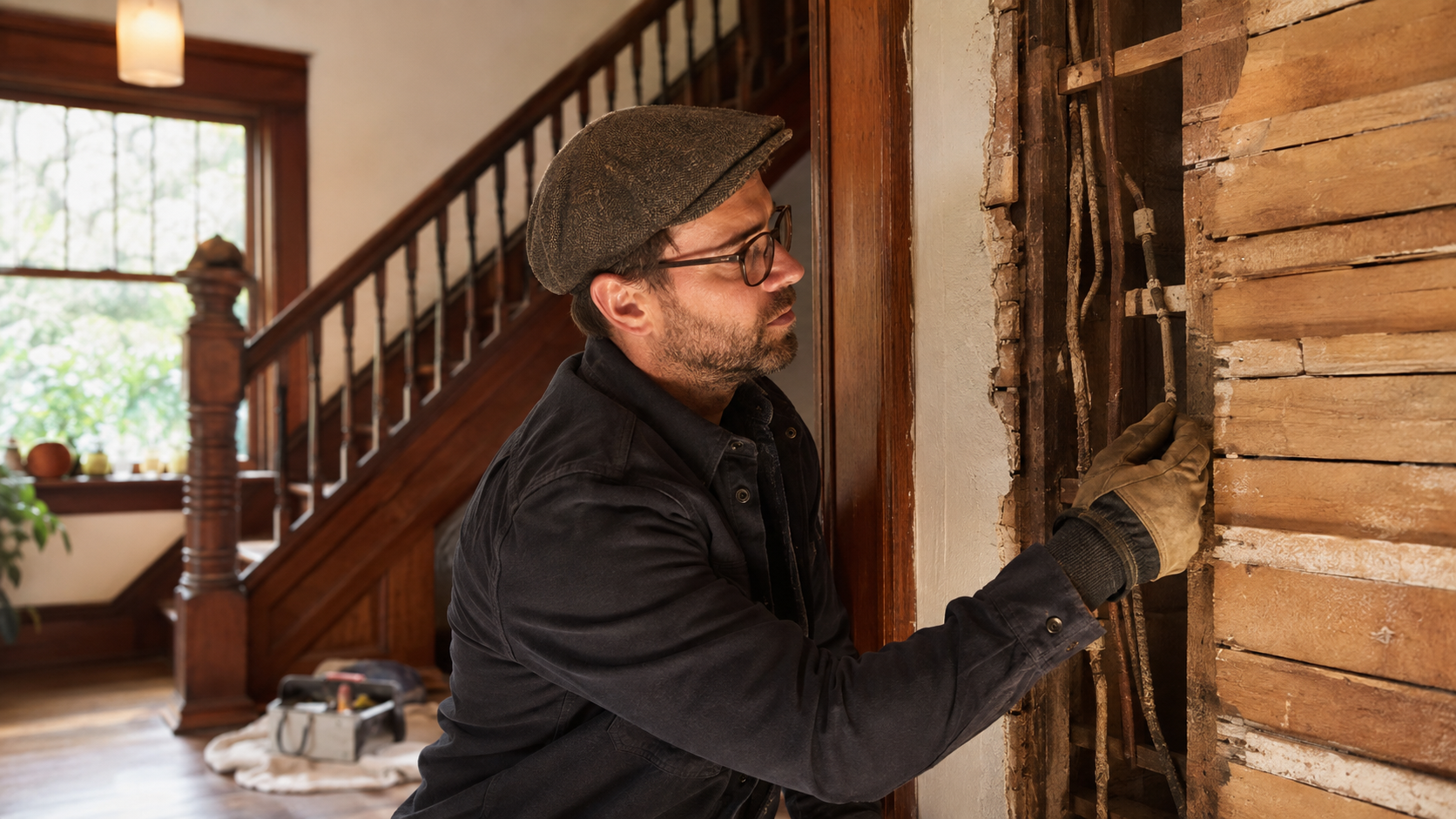
We rewire your city's pre-war houses — plaster kept intact where it can be, opened neatly where it cannot, and every circuit photographed before it disappears behind lath again. Insurers stop asking questions afterwards.
4.9 from 190 reviews · 340 houses rewired since 2006
Knob-and-tube
Removed and documented
Photographed runs
Before any wall closes
20 years
On pre-war houses
Insurer letters
Written to be accepted
What we do
Nearly everything here is invisible when it is finished, which is exactly why we photograph it. You should be able to see what you paid for after the plaster goes back.
Knob-and-tube and cloth wiring out, modern circuits in.
From $14,500 typical 1.5-storey
Fuse panels and 60-amp services brought to modern capacity.
From $3,800 with rewire
Two-prong receptacles that have no ground behind them.
From $165 per circuit
Original fixtures rewired rather than replaced.
From $145 per fixture
A century of additions, splices and abandoned runs.
From $3,200 typical
Written for underwriters and for buyers of old houses.
From $390 per report
How it works
Two hours. Every accessible run identified by era and material, photographed and written up.
A fixed price with the sequence, the access cuts and the patch standard written down.
Three to five weeks. Power on every night, dust walls up, one crew, the same faces.
Runs photographed, inspection booked, walls patched to paint-ready, drawing handed over.
340
Houses rewired
20 yrs
On character homes
1
Rewire crew at a time
4.9★
Across 190 reviews
Transparent pricing
Two houses on the same Historic District block can differ by six thousand dollars depending on what the last renovation left in the walls. That is why every quote follows a survey.
Where the dangerous wiring is confined to part of the house.
$6,400 one floor or the knob-and-tube only
The full job, sequenced around you living there.
$14,500 typical 1.5-storey
Wiring and the panel and service upgrade in one project.
$18,900 wiring and service together
These are real numbers for a 1,300 square foot one-and-a-half storey with plaster walls. Two-and-a-half storeys, a finished basement in the way, or a house that has been renovated three times will be quoted higher — and the survey tells you which one you own before you commit to anything.
Reviews
4.9 from 190 reviews · 340 houses rewired since 2006
“1908 house, knob-and-tube in three rooms and a fuse panel. Four and a half weeks, power every night, and the photographs of every run are now in the file I will hand the next owner.”
“They talked me out of rewiring the second floor — showed me photographs proving it had been done properly in the 1980s. That honesty cost them about five thousand dollars of work.”
“Our insurer wanted knob-and-tube gone before renewal. Heritage Wire did the work and wrote the letter in the exact form the underwriter wanted. No follow-up questions at all.”
Service area
We work almost entirely in your city's pre-1950 housing, because the surprises in those houses are the ones we have already met. Newer homes we take on referral, usually for aluminum remediation.
Every concealed run is photographed and the set emailed to you before the plaster goes back. If a connection we made ever fails, we repair it and make good the finish — two years on a rewire, five when the panel is part of the same project.
FAQ
Send a photo of your basement joists to hello@example.com and we will identify the wiring era for free — no visit needed.
Ceramic knobs on the joists and black cloth-covered conductors running separately, visible in most unfinished basements and attics. Send us a photo and we will tell you for free, no visit needed.
Many your region insurers will not write a new policy on a house with active knob-and-tube, and some will not renew. Policies differ, so ask yours directly — then send us what they said.
No. We sequence so the power is on every night. Expect dust walls, a room or two out of service at a time, and no power in the work area during the day.
Less than you fear. Most runs can be fished from the basement or attic; the cuts we do make are neat, planned with you and patched to paint-ready.
Two hours, every accessible run identified by era and material, a written plan that separates what must be done now from what can wait a decade, and photographs you keep.