Reliable building climate systems planned around your facility’s operational lifecycle.
Plan commercial heating, cooling and ventilation around your facility. Explore service scopes, maintenance options and the information needed for a site assessment.
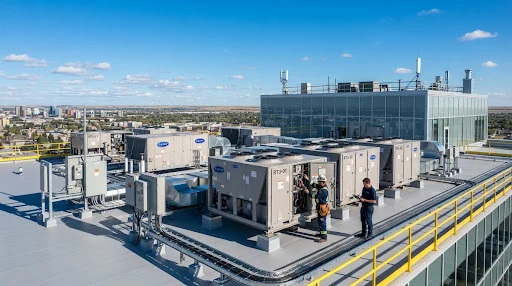
Rooftop Unit Array [RTU-01 to RTU-08]
Three-stage building alignment methodology
From envelope assessment down to quarterly calibration logs, every tier of mechanical service is calibrated for long-term envelope stability.
Facility & Building Types
Structural analysis tailored to occupant density, zoning envelope requirements, and prairie heat loss dynamics.
Core Asset Classes
High-tonnage packaged platforms and heating distribution modules engineered for heavy cycle demands.
Service Execution
Predictive seasonal overhaul, regulatory emissions validation, and planned capital equipment lifecycle reserves.
Prairie Seasonal Maintenance Calendar
Manitoba temperatures swing from -40°C to +35°C. Systems engineered for this 75-degree spread require seasonally distinct inspection routines.
Sub-Zero Run
Extreme cold thermal endurance, continuous freeze stat surveillance, and fresh air mixing verification.
Freshet & Cooling Prep
De-winterization, spring run-off checks, coil washes, and refrigeration circuit pre-commissioning.
Peak Cooling
High ambient stress tests, electrical draw audits, and continuous indoor humidity balancing.
Pre-Winter Burner Check
Heating cycle validation, safety switch testing, gas valve seating, and flue draft calibrations.
The true cost of building mechanical management
Compare reactive emergency repairs with a planned lifecycle strategy engineered for asset protection and consistent CAPEX forecasting.
Assess the actual equipment, access, service history and operating requirements before agreeing maintenance tasks and timing. This demonstration does not guarantee uptime, emergency response or qualifications.
-
Emergency Crane & Logistics Surcharges
Sourcing replacement rooftop units during a deep-freeze cold snap costs up to 140% above planned changeouts.
-
Tenant Disruption & Rent Abatement Claims
Loss of heating or retail climate during prime trading hours leads to tenant grievances, lost revenue, and lease friction.
-
Premature Capital Deprecation
Clogged coils and worn bearings force compressors to run beyond design limits, reducing useful asset lifespan by 30–45%.
Structured inspection cycles, continuous performance tracking, and clear equipment replacement forecasts provide predictable operations.
-
Scheduled Off-Peak Lift Cycles
Bulk crane scheduling, pre-ordered commercial equipment, and planned installations minimize capital expenditure premiums.
-
Consistent Thermal Comfort & Air Quality
Preventive economizer tuning maintains tenant comfort across temperature swings without spike loads.
-
Documented Multi-Year Replacement Reserves
Every RTU is logged in a digital asset inventory with calculated Remaining Useful Life (RUL) for annual capital planning.
Facility operations across Winnipeg
See how structured multi-year maintenance regimes stabilize critical systems in commercial real estate.
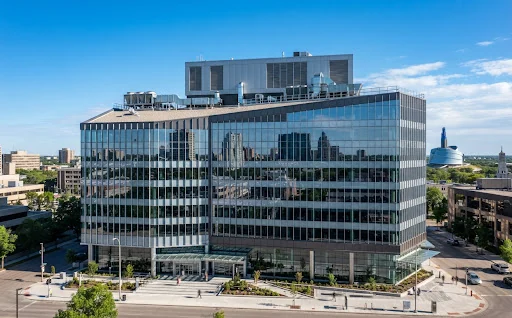
Portage Avenue 4-Storey Office Complex
Facing 6 aging rooftop units reaching the 15-year threshold. Crosswind engineered a 3-year phased replacement schedule, replacing 2 units annually to spread out capital expenditures while maintaining tenant comfort.
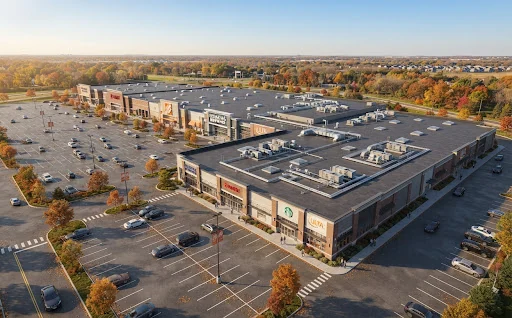
Kenaston Commercial Strip Centre
Severe indoor temperature variations between retail storefronts caused repeated tenant service requests. Crosswind calibrated make-up air dampers and resolved thermal conflicts across 11 individual packaged units.
Plan your building's HVAC maintenance programme before seasonal extremes hit.
Book an on-site equipment audit. We inspect your rooftop units, make-up air systems, and hydronic plants to deliver a transparent multi-year mechanical plan.
Demonstration notice: Crosswind Mechanical demo site. No actual service appointments booked.