Pragmatic Prairie Building Envelope Stewardship.
Rooted in Winnipeg’s severe continental climate, we provide honest, meticulous pre-winter maintenance and diagnostics for residential structures before hard freeze-up locks the soil and strains mechanical systems.
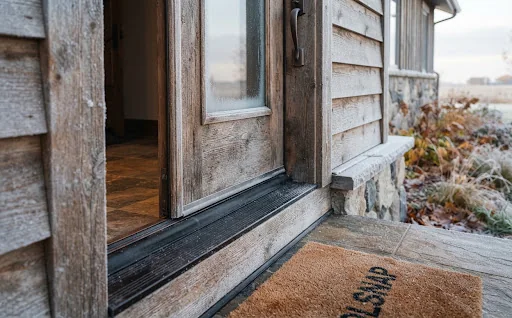
Winnipeg South Osborne late October sill plate inspection
The Winnipeg Climate Reality
Continental extremes impose extraordinary mechanical loads on building envelopes. Our work operates directly within the physics of severe temperature delta, hyper-expansive Lake Agassiz gumbo clay, and windward negative pressure.
70°C Annual Delta
From humid +30°C July summers to -40°C January polar wind blasts, structural framing expands, contracts, and tears conventional caulking within 24 months.
Lake Agassiz Clay
Expansive montmorillonite clay soils swell with autumn rain and desiccate during freeze. Result: foundation shifting, door out-of-square, and cracked basement rim joist seals.
Stack Effect Exfiltration
Heated interior air escapes violently through unsealed attic hatchways and can-lights, pulling frigid outdoor air across floorboards and freezing hidden water lines in crawlspaces.
2.4 m Frost Line
Prolonged -30°C temperatures drive deep subsoil frost. Exterior hose bibs left charged will shatter copper back 3 feet inside exterior walls before first January blizzard.
The Seasonal Methodology
We treat residential repair not as sporadic reactive fixes, but as a deliberate seasonal sequence adapted to weather deadlines.
Envelope Diagnostic Walkthrough
Multi-point surface & draught survey
Full sensory and digital reconnaissance: infrared temperature differential check, exterior perimeter wall inspection, attic hatch baffle test, and basement rim joist insulation audits.
Targeted Physical Interventions
Cold-rated materials before ground freeze
Execution of the high-leverage envelope adjustments. We apply low-temperature elastomeric mastics, rehang misaligned exterior doors, renew sweeps, and isolate plumbing conduits.
Field Log & Thaw Advisory
Winter performance review & melt audit
Every home receives an itemized Field Log documenting all completed seals, remaining envelope age factors, and proactive spring melt protocols to prevent basement seepage.
Clear Boundaries. Zero False Claims.
We believe the trade repair industry suffers from muddy scopes and unillustrative risk-taking. Coldsnap is unapologetically clear on what we do skillfully, and exactly where we stand down and refer to illustrative master trade qualification trades.
What We Do Gladly
-
Exterior Weather-Stripping & Sweeps: Mortised bronze, silicone bulb seals, and heavy vinyl door bottoms adjusted for out-of-plumb seasonal shift.
-
Sill Plate & Rim Joist Air Sealing: Air barriers, low-expansion fireblock foams, and vapor check points in unfinished basements.
-
Outdoor Spigot Isolation & Blowouts: Interior valve cut-off, bleeder valve drainage, exterior anti-freeze sleeve verification.
-
Storm Window Glazing & Sash Tightening: Historic millwork adjustments, turnbuckle hardware, and removable seasonal sealant films.
-
Foundation Drainage Deflection: Downspout extensions, winter splash block orientation, and window well covers.
Where We Refer Out
-
Furnace Burners & Heat Exchangers: Gas manifolds, flue venting, and combustion chambers require qualified Class A or B Gas Fitters.
-
Breaker Panel Alterations & Heavy Wiring: Subpanels, heavy-amp service upgrades, or internal wiring require a qualified Master Electrician.
-
Municipal Sewer Stacks & Cast Iron Line Work: Under-slab drains, rough-in relocations, and backwater valve installations belong to trade qualification Plumbers.
-
Structural Foundation Underpinning: Drilled concrete piles, helical screw piles, and major basement crack epoxy injection under hydrostatic pressure.
Team & Material Standards
Ordinary consumer caulking freezes in tubes below 5°C. Our field kits are packed specifically with industrial cold-weather compounds and diagnostics engineered for prairie sub-zero application.

Garth Lindqvist
22 years troubleshooting River Heights, Wolseley, and Fort Garry heritage homes. Specializes in balancing sash weights, antique bronze weather-strip rebuilds, and out-of-square foundation frame tolerances.
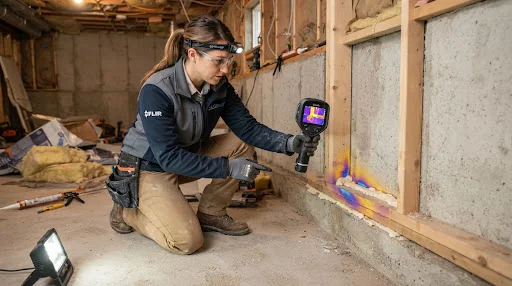
Elena Froese
Specialized in thermography, negative air pressure drafts, and moisture-barrier continuity. Dedicated to discovering micro-leaks before attic frosting creates catastrophic spring melt "attic rain".
illustrative Field Chemistry
We never use standard indoor latex acrylic or budget hardware store sealants on exterior barriers.
Ready to inspect your envelope before the ground locks?
Once subsoil temperatures plunge below freezing, exterior elastomeric caulking and foundation grading corrections become impossible until May. Schedule your pre-freeze property review today.